24 saat müşteri yardım hattı +86 15395181370



Manual Deburring Machine – M300
Industrial surface finishing · Slag & burr removal · Vacuum workbench · Dual grinding heads
📋 Document outline – quick summary
1. Product & key features vacuum + dual heads + dust extraction
- Workbench + mechanical polishing arm for small-batch metal sheets
- Self-regulating vacuum adsorption – no clamps required
- One power unit, two grinding heads (180° rotation for fast changeover)
- Integrated dust collection system (1000 m³/h suction) – protects health & workshop cleanliness
2. Technical specifications about manual deburring machine
- Table: 1200×750 mm | Processing thickness: 0.5–100 mm
- Total power: 4.1 kW | Disc brush: Φ162 mm | Sandpaper: Φ150 mm
- Suction air volume: 1000 m³/h | Operating environment: -5°C to 50°C, avoid dust/humidity/chemicals
3. Critical safety warnings ⚠️
- Dust explosion hazard: Light metal dust (Al, Mg) highly explosive. Never grind spark-emitting materials (steel) after processing light metals without thorough cleaning of brush, ducts, collector.
- Electrical grounding & shock prevention: Connect only to grounded outlet. Single device per socket/control box. No wet hands near switches. Disconnect power before maintenance.
- Fire prevention: Daily removal of metal dust/debris. Professional fire safety training advised.
- Do not use in: poorly ventilated, dusty, humid, or chemical-laden environments.
4. Operation workflow
- Startup: Check power + emergency stop → turn on dust extraction → process workpiece.
- Brush replacement: Lift swing arm → unscrew lock nut → pull out old brush → install new one.
- Brush usage: moderate humidity storage, inspect for edge cracks, jog rotation after installation, idle 3 min before full operation.
- Extending brush life: even brushing distribution, larger burrs first, daily visual checks.
5. Maintenance & cleaning schedule
- Daily: wipe manual deburring machine, check brush wear.
- Bearings: lubricate every 300 hours.
- Filter cartridge: clean every ≤15 days with compressed air (gas gun).
- Cleaning: power off, dry cloth only – no water spray, no chemicals (alcohol, benzene, detergents etc.)
6. Dual-head & vacuum advantage summary
- 180° rotation for instant grinding head change · automatic suction distribution · energy efficient · low maintenance
1. Product Overview
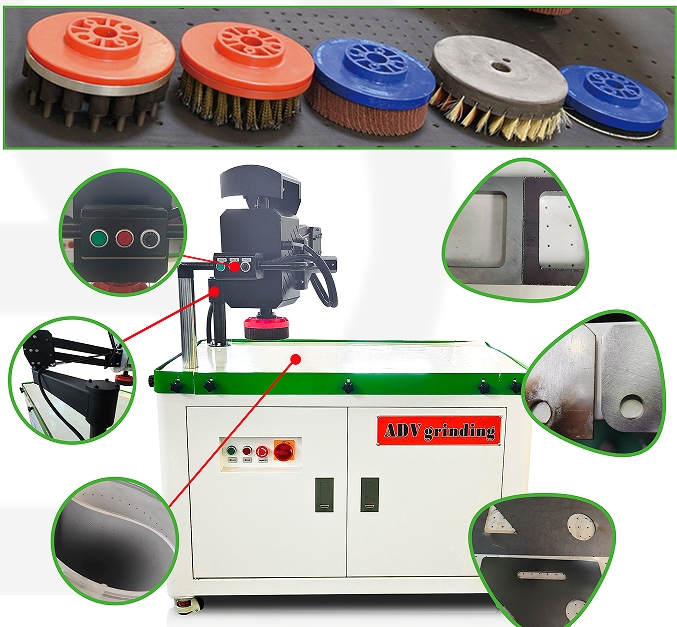
The M300 manual deburring machine combines a rigid workbench with a mechanical polishing arm, designed for small-batch metal sheet surface polishing, slag removal, deburring, and descaling. The self-controlled vacuum workbench automatically distributes suction, holding workpieces firmly without any clamps – simply lay the material flat. One power unit drives two grinding heads; rotating 180° allows fast head changeover, boosting efficiency and saving energy. Built‑in dust collection automatically extracts grinding debris, protecting operator health and keeping the workshop clean. Different disc brushes can be selected for ideal results per workpiece.
✔ No clamping needed
✔ 180° swivel dual heads
✔ Automatic dust suction
✔ Manual pressure control
✔ 0.5–100 mm thickness range
2. Technical Specifications
| Workbench width | 1200 × 750 mm |
| Processing thickness | 0.5 – 100 mm |
| Suction air volume | 1000 m³/h |
| Total power | 4.1 kW |
| Disc brush diameter | Φ162 mm |
| Sandpaper size | Φ150 mm |
| Ambient temp. range | -5°C to +50°C |
| Controls | E-stop, start/stop, speed adjust, power switch |
Environmental restriction: Do not use in poorly ventilated, dusty, humid or chemical-heavy areas. Avoid hard impacts on the unit.
3. Safety Instructions
⚠ DUST EXPLOSION RISK – LIGHT METALS (Al, Mg, etc.)
All grinding dust can cause explosions. Light metal dust is highly explosive – any spark may ignite it.If the manual deburring machine ever processed light metals, do not grind spark-emitting materials (e.g., steel)without completely cleaning the brush disc, ductwork, and dust collector. Residual light metal dust can be ignited by sparks, causing explosion. Daily cleaning of metal debris is mandatory. Professional fire safety training for employees is strongly recommended.
3.1 Electrical safety & grounding
- Never use damaged power cord/plug. Connect to a grounded outlet only.
- Do not connect multiple devices to the same power socket or same control box – overheating and fire risk.
- Do not touch electrical box switches with wet hands – risk of electric shock.
- Ensure the power plug is firmly inserted into the control box breaker.
- Do not bend, pull or place heavy objects on the power cord.
- Only qualified electricians may open the distribution box (dangerous voltage inside).
- Disconnect main power before any lubrication, repair or maintenance – live operation may cause severe injury or death.
3.2 General operation & environment
- Read entire instruction manual before first use – contains critical warnings.
- Proper dust collection system must be turned on during grinding.
- Maintain a clean work environment; remove metal chips and dust daily.
- Do not use the machine in humid or chemically aggressive areas.
4. Manual Deburring Machine Operating Instructions
4.1 Startup procedure
- Check power supply is normal.
- Verify emergency stop switch works correctly.
- Turn on the dust extraction system, then start processing workpieces.
4.2 Disc brush replacement
- Lift the swing arm handle to create sufficient space between brush and work platform.
- Unscrew the lock nut and pull out the current disc brush.
- Install the required disc brush by reversing the removal steps (ensure firm locking).
4.3 Disc brush use & longevity
- Storage: Keep brushes in storage box. Take out 24 hours before use and place on platform to reach moderate humidity. High humidity = soft/sticky bristles; low humidity = brittle bristles (breakage).
- Extending brush life:
– Evenly distribute brushing over workpiece to balance wear.
– Process larger burrs first, then smaller burrs.
– Inspect brush edge for cracks before use – cracked edges may cause complete tearing.
– After new brush installation, jog and rotate slowly for several turns, confirm normal operation, then run at full speed. Idle for 3 minutes before grinding workpieces.
4.4 Operating tips
Only light manual downward pressure is needed. The vacuum workbench automatically holds the workpiece flat; speed adjustment on control panel fine‑tunes the result. Dual grinding heads allow quick change between different brush types by rotating 180°.
5. Maintenance & Cleaning
5.1 Regular maintenance schedule
- Daily: Wipe machine clean, remove all dust. Check brush disc wear – uneven surface degrades workpiece quality.
- Periodic inspection: Keep all parts clean, well-ventilated, free of dust/residue. Lubricate according to operation labels/nameplates.
- Bearings: Lubricate every 300 operating hours.
- Filter cartridge: Clean at least every 15 days (depending on grinding volume). Remove cartridge and clean with compressed air (gas gun).
5.2 Cleaning precautions
- Always disconnect power cord before cleaning – risk of electric shock/fire.
- Do not spray water directly onto the machine body. Prevent water ingress; keep device dry.
- Do not use chemicals: wax, benzene, alcohol, thinner, insect repellent, lubricants, or detergents. These can damage surface finish and peel off instruction labels.
- Use a dry cloth for routine cleaning.
🔧 Locking buckle & filter access: Release locking buckles, remove filter cartridge, clean with air gun, then reinstall securely before restarting.
6. Critical Warnings Summary
| Category | Requirement / Hazard prevention |
|---|---|
| Explosion / fire | Never mix light metal residue with spark‑producing materials. Daily dust removal. Consult fire experts. |
| Electrical | Single device per grounded outlet. Avoid wet hands. Disconnect power before maintenance. |
| Environment | Well‑ventilated, dry, -5°C to 50°C. No chemical vapors, no direct water spray. |
| Brush handling | Moderate humidity storage, inspect before use, idle 3 min after installation. |
| Cleaning | Dry cloth only; no alcohol, benzene, detergents or lubricants for cleaning. |
7. Key Advantages & Efficiency Features
- Dual grinding heads (180° rotation): instant switch between brush types without downtime.
- Self‑controlled vacuum workbench: automatic suction distribution holds any flat workpiece, eliminates clamping.
- Integrated dust extraction (1000 m³/h): captures grinding swarf directly, cleaner air and workplace.
- Low operating effort: manual lever provides exact grinding pressure, adjustable speed.
- Energy efficient: single motor drives two heads, reducing power consumption compared to dual‑motor setups.